Patient engagement & telehealth · Patient intake & access
Artera
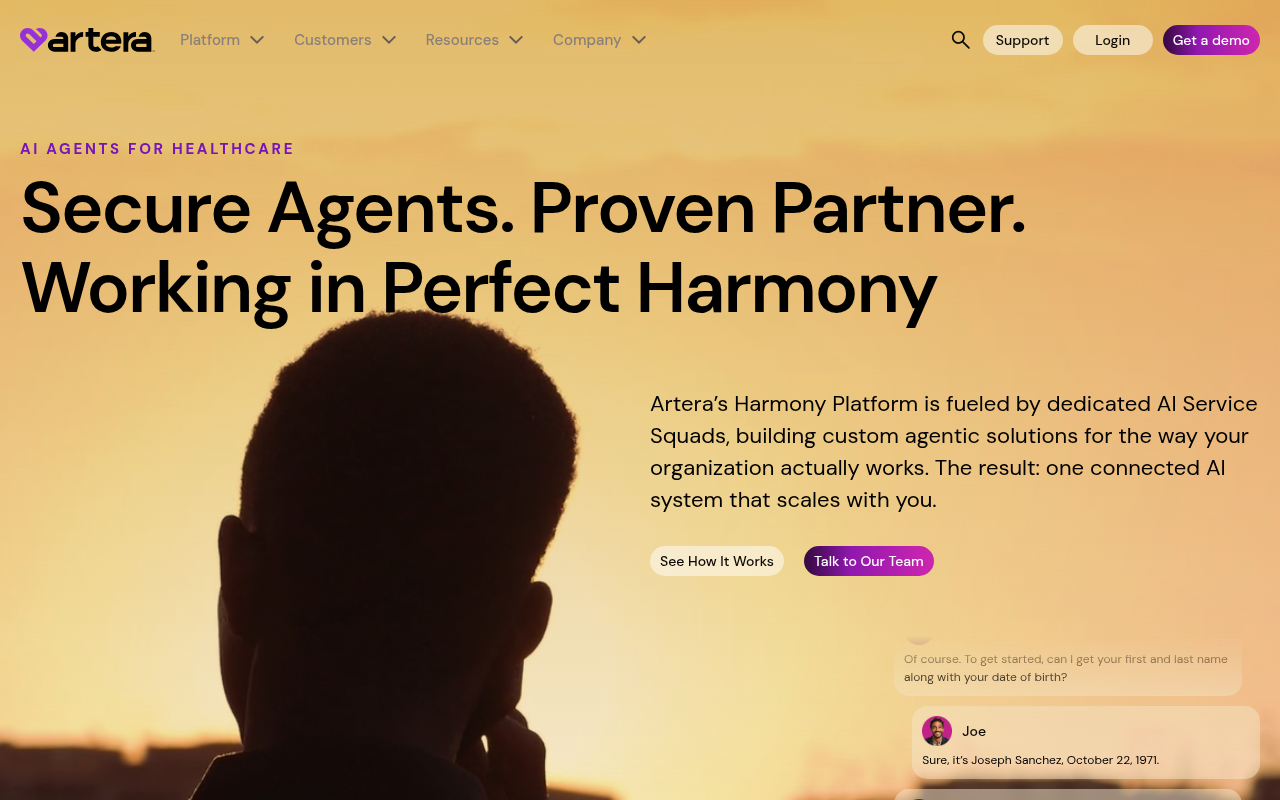
Artera makes patient messaging software for health systems and federal agencies that sends reminders, intake links, and follow-ups by text, email, and voice, with AI agents that answer patient replies.
Strong fit
- Health systems and large groups that want one patient messaging platform across departments
- Oracle Health and MEDITECH customers, whose patient messaging products run on Artera
- Federal health agencies and organizations that need HITRUST-certified messaging
Weak fit
- Small practices that need intake forms more than messaging
- Buyers who want a low-cost texting tool for one clinic
- Buyers who need a published price list
Bottom line
Artera, formerly WELL Health and based in Santa Barbara, California, runs patient messaging for more than 1,000 health organizations. It sends reminders, intake links, and follow-ups across text, email, and voice, and its AI agents answer patient replies. It fits health systems that want one messaging layer over many departments and EHRs.
Score breakdown
Weights: Outcomes 35% · Product 30% · Implementation 20% · Pricing clarity 15%.
Guillaume de Zwirek and Joe Tischler founded WELL Health in 2015. De Zwirek had collapsed from heatstroke during an Ironman race, and the phone calls and paperwork that followed convinced him patients needed a simpler way to reach their providers.
WELL went through the Cedars-Sinai accelerator run with Techstars in 2016, moved its headquarters to Santa Barbara, California, in 2017, and renamed itself Artera in October 2022.
Its platform sends appointment reminders, intake links, and follow-ups by text, email, and voice. Its AI agents now handle most patient replies without staff.
Artera serves more than 1,000 health organizations and sends more than 2 billion messages a year. Oracle Health and MEDITECH build their own patient messaging products on top of it. Its government unit, formerly AudioCARE, serves the Department of Veterans Affairs, the Department of Defense, and the Indian Health Service.
Artera is HITRUST certified and won Best in KLAS in 2021 and 2022. In December 2025 it raised a $65 million growth round led by Lead Edge Capital.
Other tools fit different needs. Luma Health suits organizations where scheduling and referrals matter as much as messages, and Phreesia suits those that put intake and payments first. Notable fits when AI agents should also handle back-office work, and CipherHealth fits when the goal is calls after discharge and rounding.
For smaller settings, NexHealth suits an outpatient practice that wants booking and messaging tied to its practice management system, and Yosi Health suits a specialty practice that needs only intake.
Competitor landscape
| Vendor | Overall | Ease of implementation |
|---|---|---|
| Phreesia | 8.2 | 7.8 |
| Tennr | 8.0 | 7.9 |
| Artera | 7.7 | 7.0 |
| NexHealth | 7.6 | 7.5 |
| Notable | 7.5 | 7.0 |
| Luma Health | 7.4 | 7.0 |
| CipherHealth | 7.3 | 7.1 |
| Relatient | 7.2 | 6.9 |
| Clearwave | 7.1 | 6.8 |
| Yosi Health | 6.8 | 7.3 |
Pricing
| Item | Detail |
|---|---|
| Model | A custom contract quoted by Artera. |
| What usually drives cost | The number of locations and departments, message volume, which channels you use (text, email, voice), AI agent add-ons, and system connections. |
| What to ask before you buy | The price per location or per message, what AI agent conversations cost, and setup fees for each EHR. |
| Published pricing | Artera does not publish a price list. |
Prerequisites for purchase
| Need | Why it matters |
|---|---|
| What you need to get Artera to function | |
| A patient access or digital leader | Messages go out from many departments. |
| EHR and scheduling integration | Reminders depend on appointment data. |
| An owner for message content | Someone approves what patients receive. |
| Patient contact and consent data | Texting needs consent records. |
| Baseline no-show and call volumes | It lets you measure the change later. |
| What will maximize your value | |
| Start with reminders and intake links | This proves value with little risk. |
| Add AI agents for replies next | This cuts incoming calls. |
| Retire duplicate texting tools | One platform keeps patients from getting mixed messages. |
| Deal-breakers | |
| There is no way to connect to your EHR | |
| No one owns message content | |
| You want a texting app for a single clinic | |
Value creation time frame
| # | Stage | Typical range |
|---|---|---|
| 1 | Contract, security review, and EHR connection | 1-3 months |
| 2 | Reminders and first departments live | 2-4 months |
| 3 | AI agents and more departments | 4-12 months |
Leadership

Methodology
| Weight | Factor | What it measures |
|---|---|---|
| 35% | Customer outcomes | Whether buyers get measurable operational or clinical-workflow results after go-live |
| 30% | Product | Capability depth, reliability, and fit for the job the category buys |
| 20% | Implementation | How hard it is to stand up, integrate, train, and stabilize |
| 15% | Pricing clarity | Whether a buyer can model total cost without a mystery quote |
| Label | Meaning |
|---|---|
| Highly recommend | Strong outcomes and product with manageable caveats |
| Recommend | Solid fit for the right buyer; know the tradeoffs |
| Conditional | Only with a specific use case or heavy caveats |
| Not recommended | Avoid for most buyers in this category |
Read our full methodology for how we weight scores and assign recommend labels.