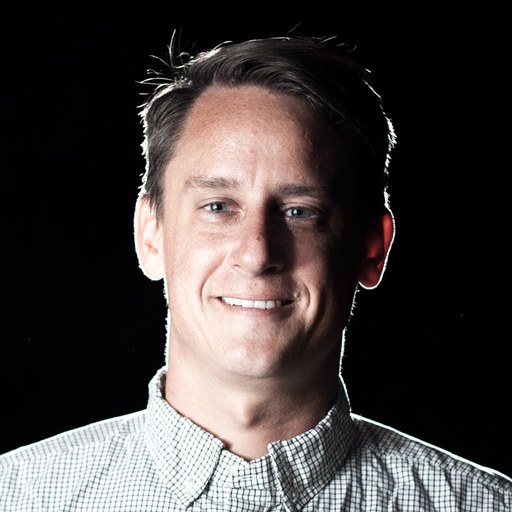
Company leader
Mike Kijewski
Founder and CEO
MedCrypt
Mike Kijewski is founder and chief executive of MedCrypt, which sells cybersecurity products to companies that make medical devices, so a manufacturer can see what code sits on a pacemaker or an imaging system and protect the data the device sends. A former high school physics teacher, he sold his first company to Varian before starting MedCrypt.
Teaching High School Physics
He earned a bachelor's degree in physics at West Chester University and taught physics at Downingtown East High School in Downingtown, Pennsylvania. "I was a physics teacher right out of undergrad. Thought I wanted to go to med school," he said. He decided "medical school wasn't for me" and turned to medical physics, the field that helps radiation oncologists treat cancer patients.
Asking Where the Software Was
He went to work for a medical-equipment firm, and his first job was calculating how thick the shielding around an X-ray installation should be. "I said, 'Where's the software?' They said they didn't have any," he said. In late 2008 he enrolled at the University of Pennsylvania, where he earned a master's degree in medical physics and then an MBA at the Wharton School.
Founding Gamma Basics
During graduate school he posted an online ad for developers, and a group from Mimeya, a consulting firm in Philadelphia, Pennsylvania, met him at Sugar Mom's in Old City and agreed to build the first version for free in exchange for a share of the company. The product, GrayCAD, designed radiation shielding. "It can take 40 hours to do the calculations by hand. We go through projects in 20 minutes," he said in 2011.
Varian Medical Systems, the largest radiation oncology company, bought Gamma Basics in 2013, and he stayed as a product manager for its quality-assurance software. He expected to last about six months at a big company and stayed three years.
Starting MedCrypt
In 2014 he saw hospitals start to ask how a cyberattack on a connected device could hurt a patient. "At the time, connected devices like CT scanners and drug infusion pumps were built with the assumption that the hospital's network was secure," he wrote. He and a co-founder started MedCrypt in San Diego, California, in 2016 to help device makers build security into the device itself.
Device makers showed little interest at first, then reversed course once the FDA issued guidance. MedCrypt went through Y Combinator in early 2019, and he has reviewed or consulted on the cryptography of more than 40 medical devices. The San Diego Business Journal put him on its 40 Under 40 list in 2021. If he were not building MedCrypt, he would run a vegan bakery he could check on after surfing every morning.